
Travel to the past
What tourism was like 100 and 200 years ago
Traveling has never been so easy before. Want to warm up in the sun in winter? Write to your favorite travel agent, choose a tour, and enjoy the sea right the next day.

But have you ever thought about what travel was like before? 100-200 years ago? When it was a privilege of gender or status, and the road from Baltic countries/Romania~Poland to Britain took up to 5 days, in contrast to a couple of hours, as it does now.
For International Tourism Day, we decided to delve deeper into its history and share the most interesting things with you. Are you ready to go on a trip with us just like in the past?
CHOOSE A TOUR
Imagine, there were times without “all-inclusive”? Package tours appeared in the 1840s when the British Thomas Cook organized a group vacation trip. But the first “all-inclusive” resort welcomed guests only in 1950 in Jamaica! Since then, a new era of tourism has begun.
Fun Fact! If you were a married woman and traveled abroad with your husband, you probably had a common passport where you were both listed as "Mr. John Smith and his wife." Only unmarried women could get a passport with their own name on it*. A married woman willing to travel alone would still get a document in her husband's name as "Mrs. John Smith."
MEANS OF TRANSPORT
Since the 16th century, Europeans began to travel between cities by public transport - the stagecoach. Before its appearance, joint travel by strangers of different sexes and statuses was indecent.
In the 20s of the 19th century, the first passenger trains were launched. They were driving only 15 km / h. But what comfort was inside: wood-lined compartments with a king-size bed, European toilets, showers, electric lamps, and even an analog of modern air conditioners**.
And in the 1920s, cruises and air travel appeared. Of course, back then it was not as fast, comfortable, and affordable as it is now. But still, there are some moments that modern travelers would definitely like to bring back from the past. What are they?
- A piano bar which was a common thing in the economy class cabin of the American Airlines 747-100
- Champagne to passengers traveling with Southern Airways even in economy class in the 70s
- No baggage checks at airports as it was until 1973
- No baggage limits as it was till the 1980s
PACKING A SUITCASE
More precisely, a travel trunk, since we are traveling in the 19th century. It had side handles and required two carriers to carry it. Surely, not everyone could afford such luxury.
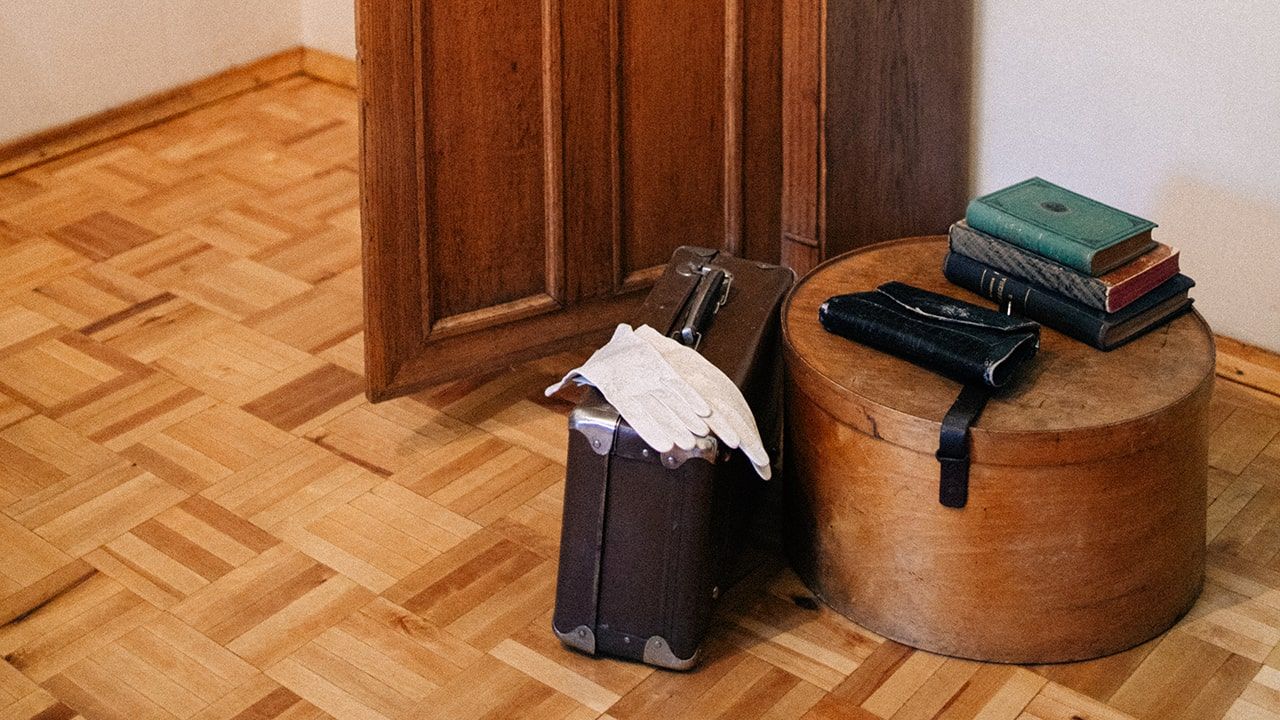
And this is a hat box for travel. Such boxes and travel trunks were made by the master Marechal in Paris, whose apprentice was Louis Vuitton. It was this famous designer, and also the personal packer of Empress Eugenie, the wife of Napoleon III, who created the first prototype of the modern suitcase, known as the “Trianon,” in the 1850s.
A little later, traveling became more accessible. Sac Voyage (from the French "Bag for Travel") has appeared. That was a capacious sack-shaped bag with one or two short handles. Besides, there were carpet bags made of old carpets.
Our beloved suitcases on wheels only appeared in 1927, when Bernard David Sadow, an employee of United States Luggage, was “inspired” by a luggage cart that an airport employee was rolling.
In the past, people always traveled with clothes for all occasions. For example, ladies took dresses for walks, for tennis, for cycling, for the evening. What else should you have with you on a trip? Here's a small checklist:
What's in the suitcase?
- Travel "etui" or "toilet" sets. They included small portable tools: tweezers, brushes and combs, sewing needles, and powder cases. For men, shaving accessories were also a must.
- A hand warmer with a special powder inside. It was first heated on the stove and then folded into a muff to warm your hands on the road.
- A blanket for those traveling by stagecoach, as it was so cold there.
- A small gramophone with tiny records that could only fit two melodies.
- Headrest – a wooden box for money and valuables our ancestors used instead of a pillow.
CHOOSING A LOOK FOR THE TRAVEL
In the 19th century, the road was considered a “dirty” business because of the dust and soot in transport, so it was necessary to take things separately for the road and for vacation. Some guidebooks even suggested wearing old clothes on the road that you wouldn’t mind throwing away when reaching your destination. Later, a travel wardrobe became popular - an analog of a modern organizer for things, where one could hang clothes directly on hangers, and put shoes in drawers.
For a long journey in a horse-drawn carriage, oiled linen travel breeches were an ideal option. They also came with a special powder, which was supposed to clean, preserve, and refresh the trousers after a long journey***.
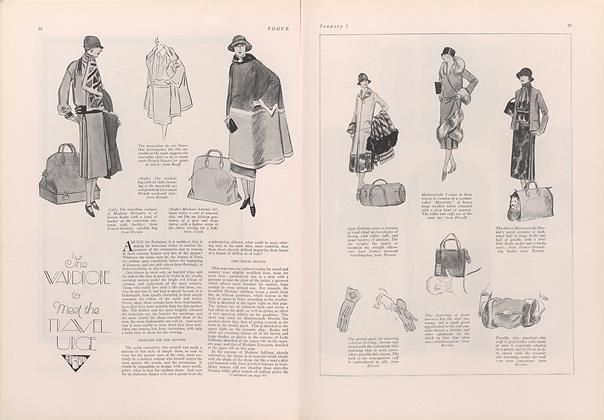
In the early 20th century, things got a lot better, but dressing properly for the road was still quite a challenge. The 1925 issue of Vogue even featured an article, “The Wardrobe to Meet the Travel Urge,” to help ladies choose the right outfit.
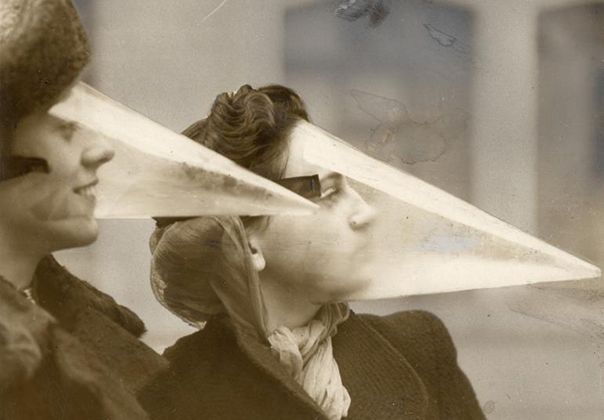
It was especially tough traveling during the cold season. For example, stagecoach passengers were given special leather curtain aprons to cover themselves from the weather - there were “half-length” and “face and chest” options.
This device was invented in Montreal to protect travelers from the snow.
It's really impressive how much more comfortable and accessible tourism has become in just a couple of centuries, isn't it? And what else awaits us in the future! But that's another story and we are very happy to be creating it together with you.