
La vida es bella
Life is beautiful in Mallorca
Mallorca is now among the world’s top 5 tourist destinations and ranks second in popularity among European travelers.¹
Let’s see what la vida es bella really means, and how weekends and weekdays look like in Mallorca.

Mallorca is distinctive, even magical: like the fragrance of a perfume blended from familiar and recognizable notes — and yet, once on your skin, it reveals something new and subtly beautiful. Its landscapes are so beautiful, as if someone painted them. Just look at Cala Romantica beach (S’Estany d’en Mas) — and you’ll catch the idea. Turquoise water, powdery sand framed by cliffs, mastic trees, rosemary, and pines.
On Mallorca, there are some truly unique spots…
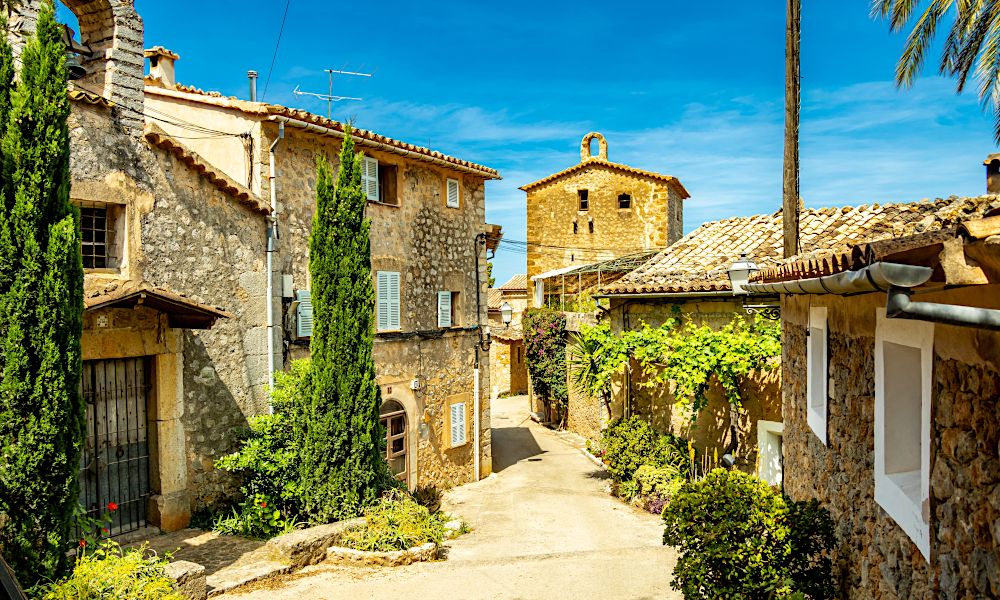
… where artists gather from all over the world. The mountain town of Deià has held its reputation as a bohemian hotspot for decades.
In 1838, ferries began running from Barcelona to Palma, the largest city on Mallorca. Artists and intellectuals explored the island’s beauty and soon started stopping in Deià more and more often. By the early 20th century, the town had developed a distinctly artistic profile, much like Barbizon or Montmartre once did. You can still feel that atmosphere today.
Deià is home to one of Mallorca’s most luxurious hotels — La Residencia Hotel 5*, part of the prestigious Belmond collection. Anywhere else, people would be doing yoga on a spacious lawn or strolling among flower gardens — but here, renowned painters set up their easels. You can easily come across an impromptu open-air painting session and feel the air charged with inspiration.
… where Spanish is hardly heard at all. On the streets, it’s German that dominates: Germans come here on holiday, work in hotels and restaurants, and many have even bought summer residences. Entire towns are like that — such as Santa Ponça and Port d’Andratx.
In recent years, Mallorca has firmly held its status as a favorite destination for German travelers — almost every second tourist comes from there.² Many return to the very same hotel year after year. It’s no surprise that their holiday spending here exceeds that of other nationalities.³ Such devotion has even given rise to a cultural phenomenon. The German press regularly publishes Mallorca’s weather forecast, and the island is jokingly referred to as “Germany’s 17th state”.** Mallorca has a German radio station, familiar supermarket chains, sausage stands, and even signs and menus in restaurants are often duplicated in German.
… where afternoon tea is swapped for a rave. Yes, the British also love to holiday here.² Most of the island has a conservative, measured vibe, where the sound of porcelain clinking on a summer terrace mingles with the murmur of the sea. But there is one big exception — Palma’s El Arenal district. Its liveliest street, Santa Catalina, is practically a lineup of bars, clubs, cafés, and restaurants.
Seafood? Pair it with this
Mallorca is a rocky island with stony soil, so instead of cows, you’ll mostly see sheep and goats grazing here.
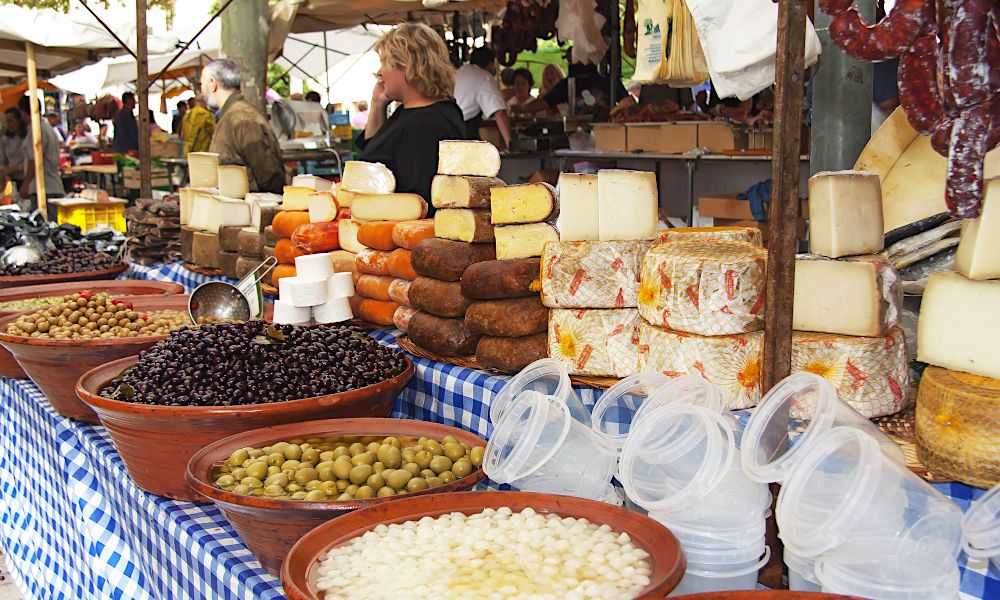
Be sure to try:
- the local goat cheese — unbelievably fragrant and rich;
- lamb dishes — hearty, authentic, and plentiful;
- sobrassada — the iconic soft paprika-spiced sausage.
Farming is actively supported here. Even in chain supermarkets, most of the products are local, and the markets are a true farmer’s paradise. Some vendors will even give you a business card so you can visit their farm and pick the freshest vegetables and berries yourself.
Write Down
- Which market to visit? Mercat de l’Olivar in Palma. You can buy local products, snap Instagram-worthy food displays, and enjoy fresh oysters or tapas.
- Where to look for souvenirs? Mercat de Santa Catalina, also in Palma. In the mountains, they produce yarn, woollen items, and embroidered tablecloths — all brought here for sale.
- Where to taste delicious paella? Valldemossa, Can Costa restaurant. They serve an excellent paella mixta — with both meat and seafood.
ℹ️ Markets are open only until midday and close on weekends. Some venues take a long siesta: from 3:00 PM to 7:00 PM the doors may be closed.
Where to head for experiences
The island truly reveals itself when you allow yourself to get a little lost among its stories, landscapes, and shapes. Here are a few fail-safe spots to start exploring Mallorca.
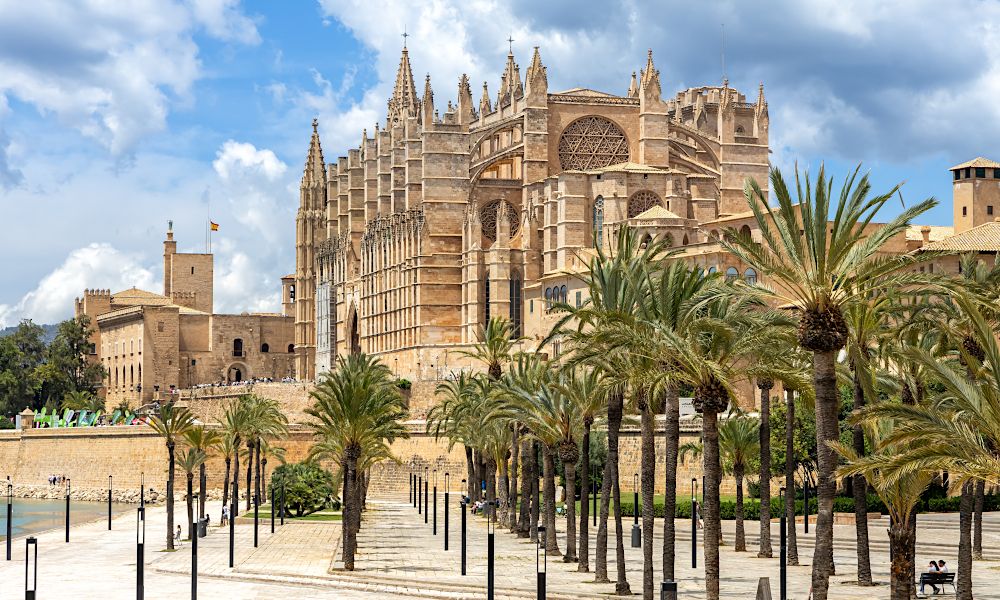
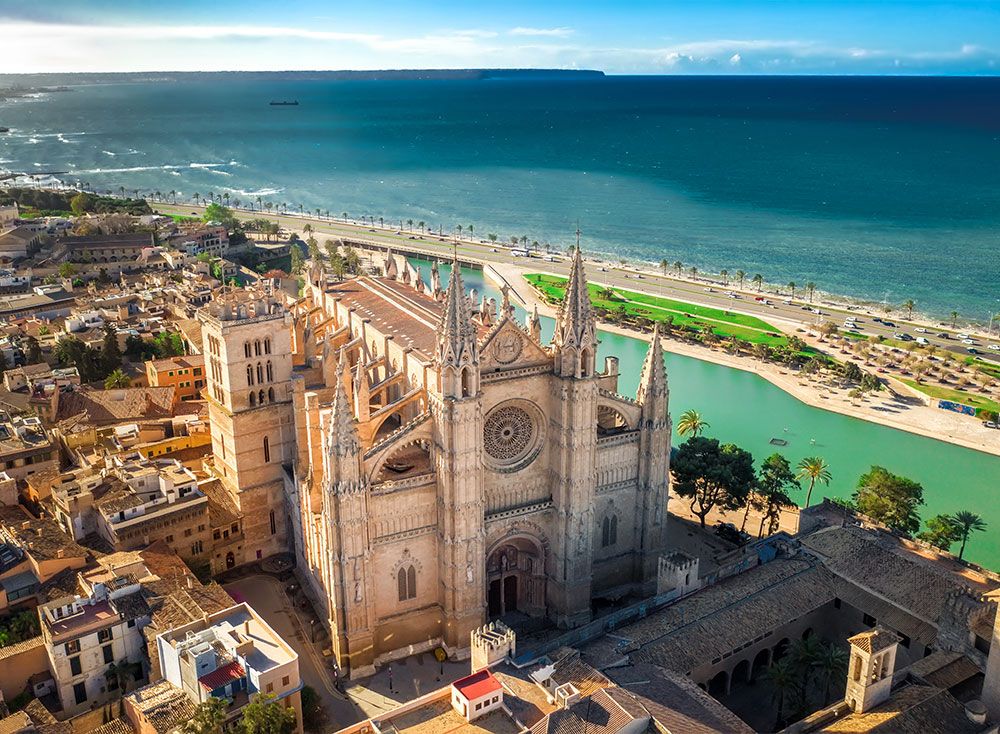
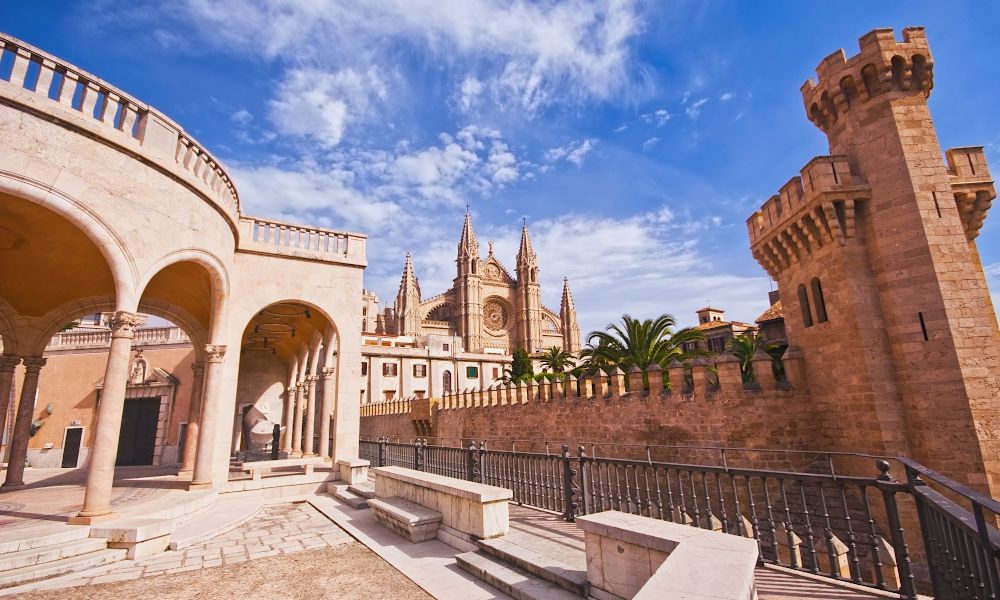
Catedral de Mallorca, or La Seu
A grand Gothic cathedral built between the 14th and 17th centuries. Its rose window is the second largest in the world, and its nave is the eighth tallest.⁴ Entry to the cathedral and access to the terraces, offering breathtaking views: €25.
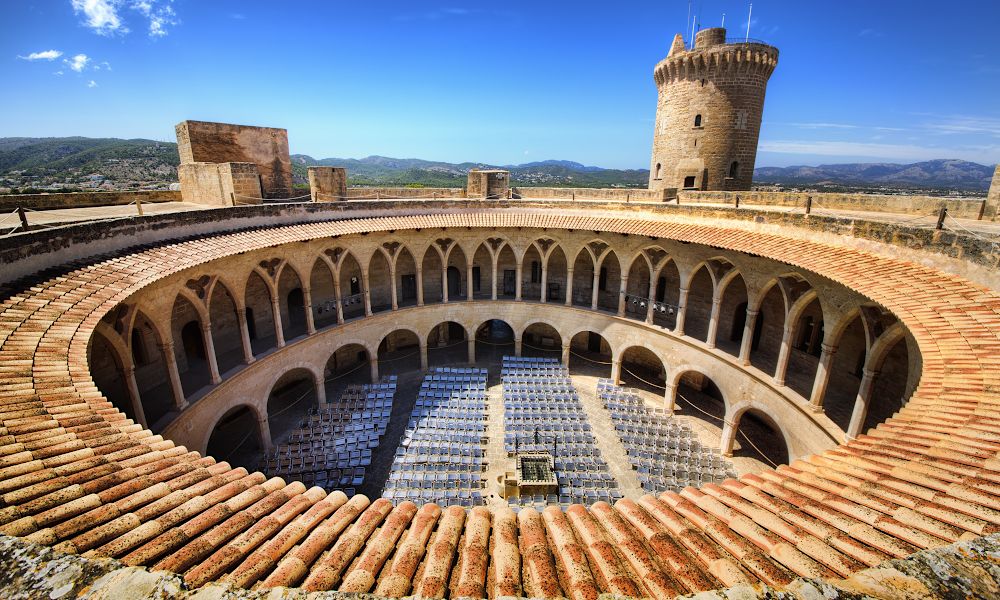
Castell de Bellver
In Catalan, it means “beautiful view.” The castle stands on a hill west of Palma, providing panoramic views of the city, the bay, and the Serra de Tramuntana mountains. You can also explore the historical museum. Entry: €4.
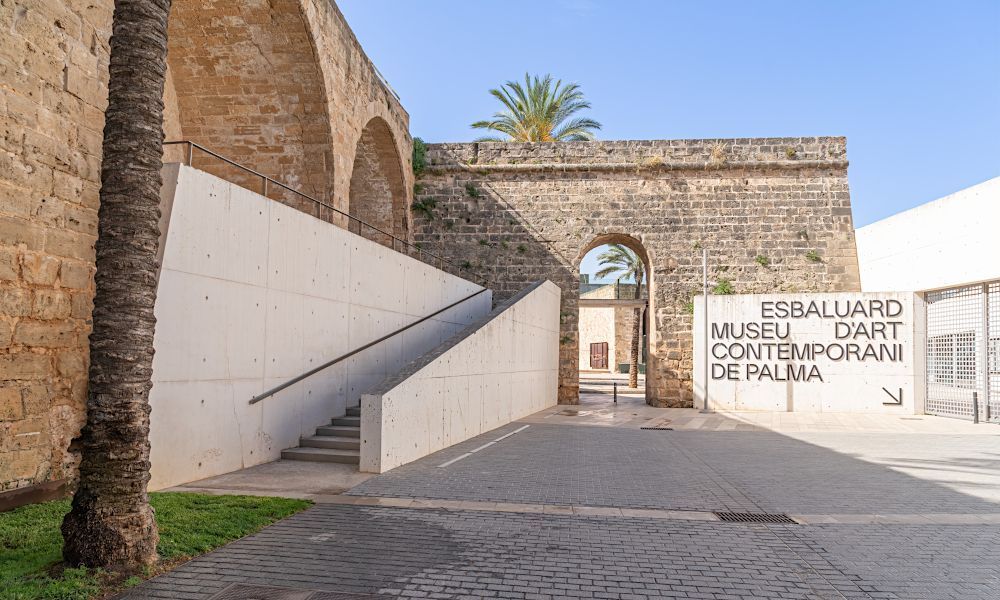
Es Baluard Museu
Its collection includes over 800 paintings from the 19th to the 21st centuries. It features works by world-famous artists such as Cézanne, Gauguin, Picasso, and Miró, as well as a collection by artists who worked in the Balearic Islands: Santiago Rusiñol, Anglada Camarasa, and Gelabert. The museum is housed in a 16th-century bastion; besides viewing the exhibits, visitors can enjoy panoramic views of the port and Sa Feixina Park.
Entry: €6.
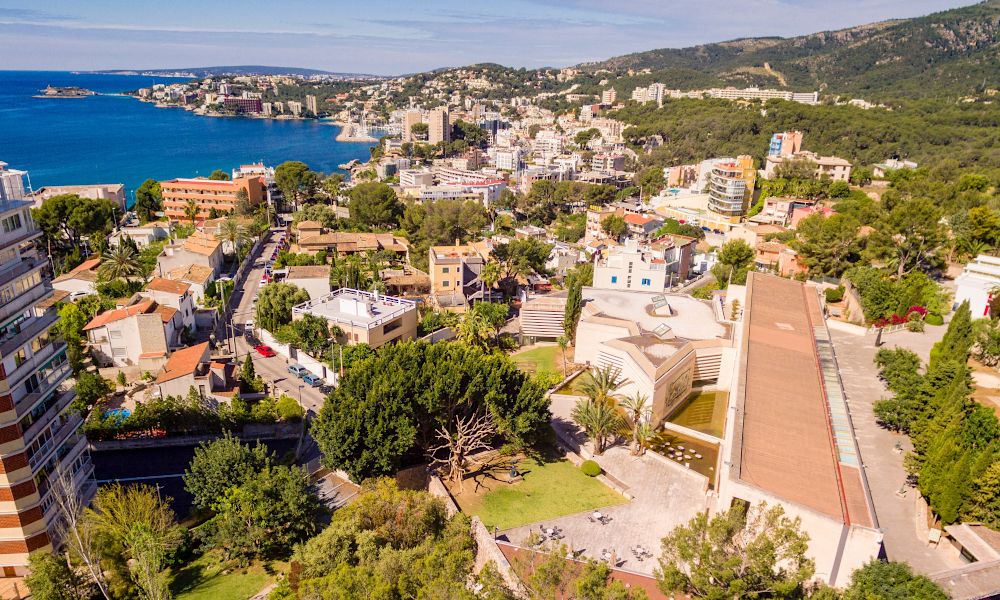
Fundació Pilar i Joan Miró a Mallorca
Joan Miró’s gallery in the Cala Major area. Visitors can see the artist’s paintings and sculptures in the very environment that inspired him. Miró lived and worked here for around 30 years. The building itself is impressive as an art object: the terracotta floor tiles are splattered with paint, and sunbeams jump through the ceiling windows. Entry: €10.
A day like a local
First impressions of the locals: reserved, ceremonious, deeply attached to their habits and traditions. Ask them to do something differently from what they're used to? Oh no, that’s impossible… Well, unless you really insist. Only for today. Fine, then.
Many live a slow-paced, “rentier” lifestyle.
Key phrases: tranquila — take it easy, relax; no pasa nada — nothing’s wrong, it’s okay; viva la vida — live your life.
Here’s what it looks like from the outside
- In the morning, they read printed newspapers over a cup of cortado — espresso with a small amount of hot milk.
- Next, they chat about the news with neighbors while enjoying a croissant or coca de trampó — something like an open pie. Thin dough is topped with a salad of tomatoes, peppers, and onions.
- Closer to lunch, you’re likely to see someone with a glass of wine and a bocadillo — the classic Spanish baguette sandwich, usually with ham and cheese.
- The day passes by the pool or on the terrace of a local restaurant. The places that locals like, at first glance, may look like ordinary pubs, but if you want a really good meal, these are the ones to seek out.
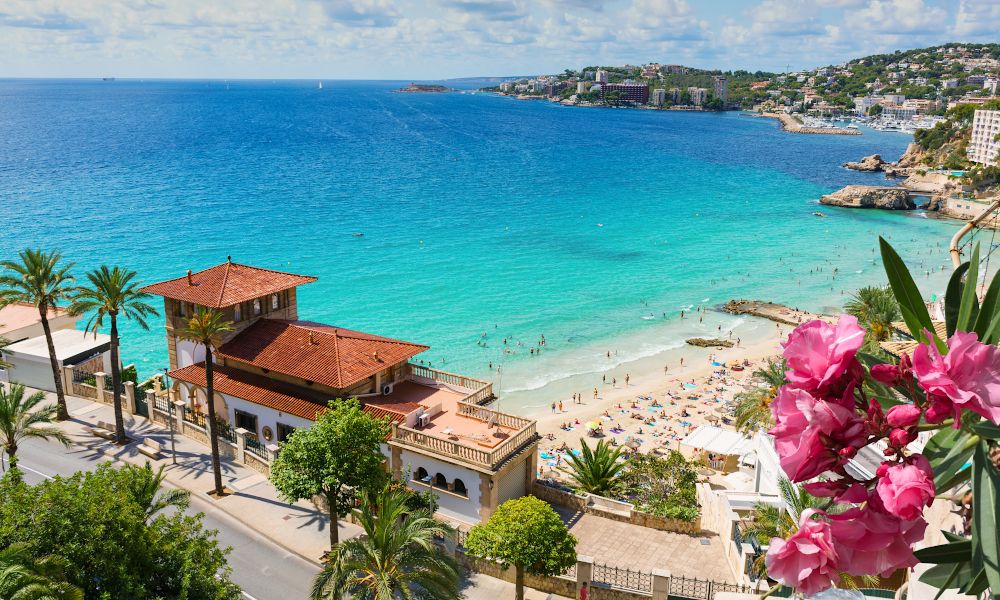
Try embracing this philosophy yourself — and you might be surprised at how much energy you carry within you every day. Or perhaps some inner puzzle will finally fall into place — and you’ll return home with permission to do today exactly what makes you happy. After all, that’s the main condition of la vida es bella — the beautiful life.
* From Spanish: “life is beautiful”
** Germany is divided into 16 political-administrative territories — federal states
1 According to Mastercard research
2 Mallorca Tourism Statistics
3 How much tourists spent in the Balearic Islands in 2024 — data from the Spanish Statistics Office (INE)
4 The Cathedral of Santa Maria of Palma — Wikipedia